Skip to content

Book description

Through verse, the rural world becomes the landscape for a woman’s resolute spiritual quest, set against the restless currents of twentieth-century China.

Twentieth-century China was rife with political and spiritual turmoil as it sought to shake off the shackles of its imperial past and move along the path of modernization. In the midst of this turmoil, Zhang Ruzhao (later ordained as Tiantai Master Benkong)—a prolific Buddhist, feminist, literary, and political figure—became disillusioned with what for her, seemed a mindless and self-interested embrace of change for the sake of change. To put into practice her exploration of Buddhist and Chinese philosophical teachings, Zhang acquired a small piece of mountainside property in 1929, turning it into a hermitage where she could engage in deep and intensive study, Buddhist practice, and self-sufficiency. It was at this hermitage that she composed an account of her life, recording her process of clearing the ground, planting trees and vegetable gardens, repairing walls, and building a modest place to live and practice.

Translated beautifully in its thought-provoking simplicity by Beata Grant, Zhang’s account is written using an interweaving of prose and short four-line poems, an emulation of the long-observed Chinese tradition of poets and intellectuals living in rural retreats, notably all of which were men. This collection offers a unique perspective on this tradition from an independent and largely solitary woman during a time marked by a radical reassessment, and often rejection, of many of the traditions of the nation’s imperial past. Zhang’s writings provide us with an extraordinary glimpse into one woman’s determination to pursue an urgent spiritual and religious quest amidst the turbulence of her times. Her contemplations, exceedingly relevant, offer solace and solidarity to readers facing an increasingly busy, confusing, volatile, and change-focused world.

Zhang Ruzhao

Author Bio

ZHANG RUZHAO ​(Tiantai Master Benkong) established a reputation as a poet early in life and was actively engaged in many of the political and feminist movements of the 1920s. Disillusioned both politically and personally, she turned to Buddhism and reinvented herself as China’s premier female lay Buddhist scholar, writer, and educator during the 1930s and 1940s. From 1949, she took ordination as a Buddhist nun and was officially designated a lineage holder in the Tiantai lineage. She was persecuted severely during the early years of the Cultural Revolution and died in 1969.

Beata Grant

Beata Grant, Translator

Author Bio

BEATA GRANT, professor emerita of Chinese and religious studies (Washington University in St. Louis), lives in Santa Fe, NM. Her publications include Daughters of Emptiness: Poetry of Buddhist Nuns of China (Wisdom Publications, 2003); Eminent Nuns: Female Chan Buddhist Masters of Seventeenth Century China (University of Hawai‘i Press, 2008); Zen Echoes: Verse Commentaries by Three Female Chan Masters (Wisdom Publications, 2017); and most recently, An Anthology of Poetry by Buddhist Nuns of Late Imperial China (Oxford University Press, 2023.)

1 / 2

Praise for the book

Red Pine

award-winning translator and author

“The clarity and sincerity in the voice of this Chinese woman living a Dharma-inspired life make this book impossible to put down. Exceptional translations. What’s surprising is that Zhang didn’t live a thousand years ago but just around the corner in 1930s China!”

Benjamin Brose

author of Embodying Xuanzang: The Postmortem Travels of a Buddhist Pilgrim and editor of Buddhist Masters of Modern China: The Lives and Legacies of Eight Eminent Teachers

“Zhang Ruzhao, a talented writer, budding official, and avid student of western thought, initially embraced the modern, secular lifestyle that was transforming early twentieth-century China. Then, finding it empty of substance and rife with suffering, she walked away. She devoted herself to farming, meditation, poetry, and the pursuit of a deeper purpose. Eventually ordaining as a Buddhist nun, Zhang went on to become a leading figure in the Buddhist revival, attracting thousands of disciples and devotees. In this remarkable book, Beata Grant translates Zhang’s poetry and prose, which remain as vivid and relevant today as they were a century ago.”

Peter Levitt

cotranslator of Yin Mountain: The Immortal Poetry of Three Daoist Women and Blossom Awakening: The Life and Poetry of Wandering Monk Saigyo

“A remarkable book. Beata Grant’s translations of Zhang Ruzhao’s twentieth-century earthy wisdom and care beautifully bring across the poet’s subtle yet profound spirit and understanding, extending Chan’s ancestral poetic tradition into modern times. In reading Zhang’s descriptions of her daily life, and the poems her secluded years as meditator, farmer, and forest dweller inspired, I felt a true companion had been found.”

Rebecca Dawn Nie

Chan master and cotranslator of Yin Mountain: The Immortal Poetry of Three Daoist Women

“In the Shade of the Green Willow has artfully captured how Zhang Ruzhao, a Buddhist woman master, navigated the tumultuous years that sandwiched the Second World War. Reading it, I found myself repeatedly moved by the master’s spirit conveyed through her own writings and by how respectfully and skillfully Beata Grant, being a renowned scholar of Chinese Buddhism and Chinese women, renders the nuances of those pivotal moments in the nation’s long thought and cultural history. The intimacy and authenticity conveyed through first-person voices and firsthand material are themselves precious teachings. I have no doubt this collection will become a classic and contribute to the English-language understanding of Chinese spiritual women and masters. It is a work whose wisdom belongs not only to its era, but to our own.”

Jan Chozen Bays

co-abbot of Great Vow Zen Monastery

“Reading this lovely book refreshes one’s very being. It draws the reader into the dream—no, the reality —of escaping the busyness and turmoil of city life and finding for oneself that ‘the unhurried life gives birth to a special awareness’ and that ‘right there in front of you is the Buddha body . . . ever still and luminous.’ It should be kept on a bedside table, where reading one or two poems can induce the quiet joy that infuses this poetry.”

Author: Zhang Ruzhao

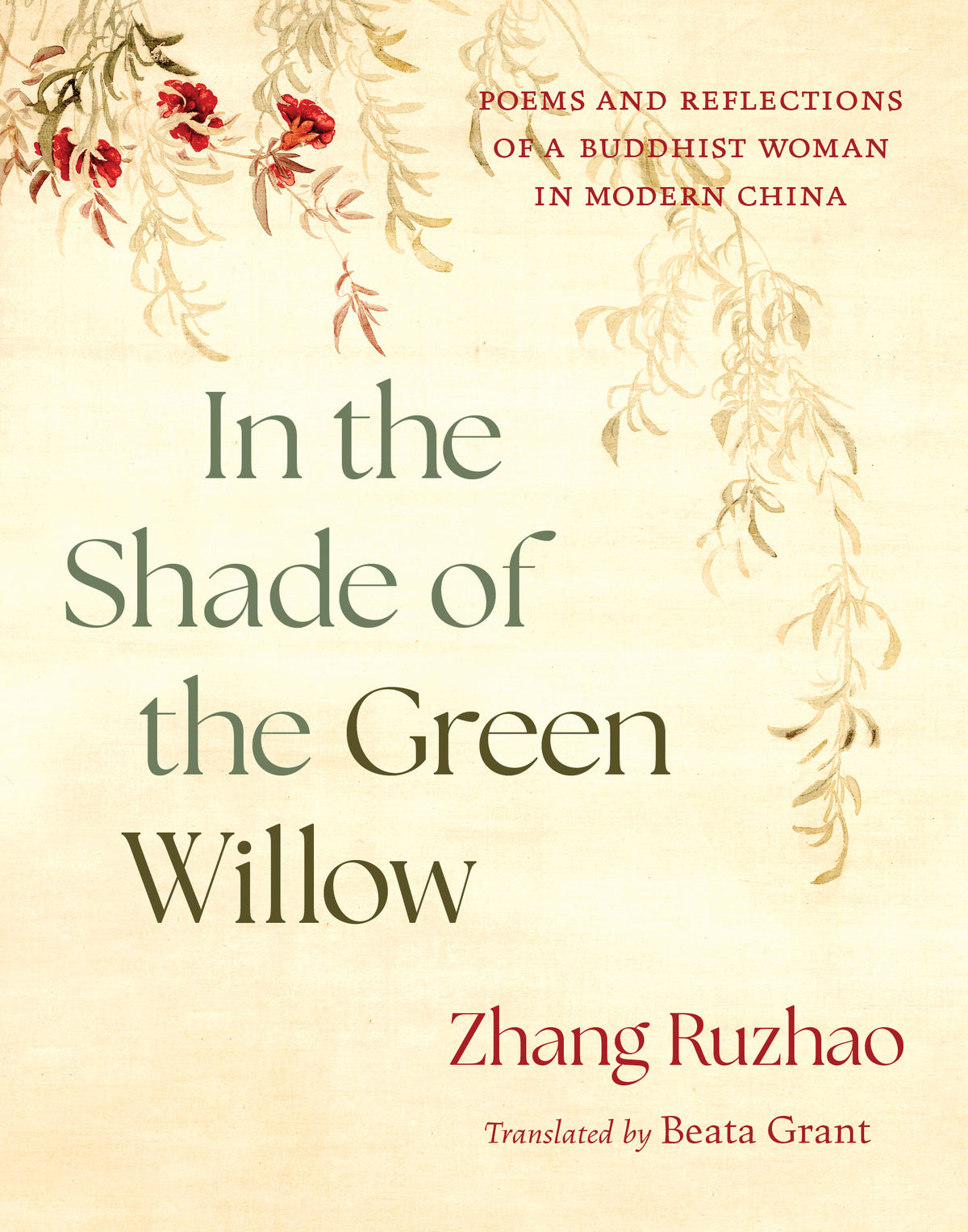
In the Shade of the Green Willow: Poems and Reflections of a Buddhist Woman in Modern China

Regular price $19.95 USD
Sale price Regular price